7 Ways AI Is Making Your Smart Home Smarter (And More Efficient)
Estimated reading time: 6 minutes
Key Takeaways
- AI in smart homes learns habits, predicts needs, and adapts to lifestyles.
- Predictive AI energy management significantly lowers utility bills.
- Voice assistants serve as central coordination hubs.
- AI-enhanced security provides intelligent and context-aware protection.
- Appliance health monitoring prevents costly breakdowns and extends lifespan.
- Adaptive environment control optimizes comfort and efficiency across the home.
- Personalized experiences create a home that truly knows its occupants.
- Seamless integration bridges diverse smart home ecosystems.
Table of contents
- Introduction
- 1. Predictive AI Energy Management
- 2. Voice Assistants
- 3. AI-Enhanced Security and Safety
- 4. Appliance Health Monitoring
- 5. Adaptive Environment Control
- 6. Personalized Experiences
- 7. Seamless Integration
- How to Get Started with AI in Your Smart Home
- Protecting Your Privacy in an AI-Powered Smart Home
- The Smart Investment
- Embracing the Future with AI in Your Smart Home
- FAQ
Introduction
AI in smart homes represents the next evolution of residential technology. Unlike traditional automated systems that follow basic schedules, AI-driven homes learn your habits, predict your needs, and adapt to your lifestyle. This intelligence connects your devices through the Internet of Things (IoT), creating a home that works with you rather than just for you.
Today’s AI-enhanced homes go beyond simple automation. Your thermostat predicts when you need heating or cooling. Lights adjust to match your circadian rhythm. Security systems distinguish between normal activity and potential threats.
Voice assistants like Alexa, Google Assistant, and Siri serve as the friendly face of this revolution, making natural language control accessible to everyone. But the real power lies in predictive AI that anticipates your needs before you express them and coordinates actions across your devices. This is achieved through intelligent agents working seamlessly within your home network.
Let’s explore seven practical ways AI is transforming smart homes to increase efficiency, comfort, and security.
1. Predictive AI Energy Management: The Smart Way to Lower Your Bills
Smart thermostats were just the beginning. Today’s AI energy systems analyze your historical usage patterns, local weather forecasts, and occupancy data to optimize consumption throughout your home. This is a key aspect of engineering a sustainable future within your own living space.
The system works by connecting multiple devices:
- Smart thermostats and HVAC zoning systems
- Water heaters with learning capabilities
- EV charging stations that schedule around utility rates
- Home battery systems that store energy during off-peak times
AI learns when you’re home, sleeping, or away, and adjusts accordingly. It monitors weather forecasts to prepare for temperature changes and understands utility time-of-use rates to shift energy consumption to cheaper periods. These optimizations typically reduce energy bills by 15-25%.
Setup Tip: Start with a learning thermostat like Nest or ecobee. Enable eco modes and connect to utility demand-response programs if available in your area. Smart home revolutions are often led by Matter and AI.
2. Voice Assistants: The Central Nervous System of AI in Smart Homes
Voice assistants have evolved from simple command-takers to sophisticated AI hubs that coordinate your entire smart home ecosystem.
Modern voice systems can:
- Understand context across multiple commands
- Remember your preferences for different times of day
- Coordinate complex routines across dozens of devices
- Learn from your interactions to suggest helpful automations
When you say “Good morning,” your assistant might adjust lighting, start coffee brewing, share your calendar, and set the thermostat to your preferred morning temperature—all while accounting for the current weather and traffic conditions.
For many homeowners, voice assistants provide the easiest entry point to AI home automation. They bridge various device ecosystems and create a more intuitive user experience. They are truly at the forefront of the future of smart homes, offering seamless integration.
Privacy Tip: Use mute buttons when not actively using voice features, and regularly review and delete your voice history through companion apps.
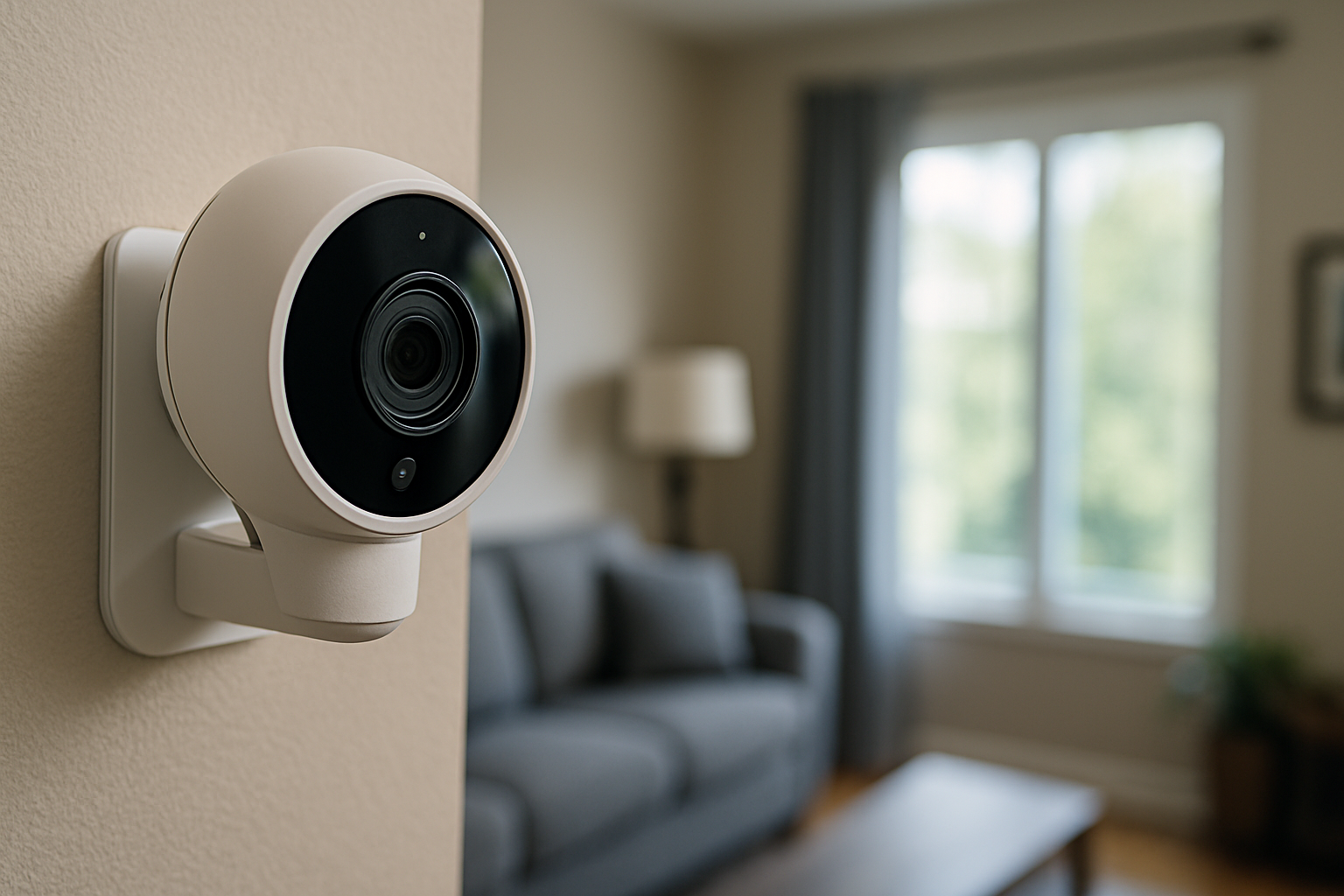
3. AI-Enhanced Security and Safety: Protection That Learns and Adapts
AI has transformed home security from simple motion detection to intelligent protection systems that understand context.
Modern AI security features include:
- Computer vision that distinguishes between people, pets, packages, and vehicles
- Behavioral analysis that identifies unusual activity patterns
- Predictive alerts for potential issues before they occur
- Smart locks that recognize household members
These advances reduce false alarms by up to 95% while providing more meaningful notifications. Instead of alerting you to any motion, your system might specifically notify you when an unrecognized person approaches your door or when a package is delivered but not retrieved. This demonstrates how artificial intelligence is changing your house.
Setup Recommendation: Start with a video doorbell with person detection, then expand to perimeter cameras with advanced recognition features.
4. Appliance Health Monitoring: How AI Prevents Costly Breakdowns
AI doesn’t just control your appliances—it listens to them. Through power signature analysis and direct sensor data, AI can detect subtle changes that indicate potential problems before they cause failures.
This predictive maintenance works by:
- Monitoring electrical consumption patterns for anomalies
- Detecting irregular vibrations or sounds from motors and pumps
- Tracking performance metrics against expected baselines
- Alerting you to maintenance needs before critical failures
This approach not only prevents inconvenient breakdowns but also extends appliance lifespans and improves efficiency. Properly maintained appliances use 5-15% less energy than those with developing issues. This is a significant advantage of AI smart home automation devices.
Setup Guidance: Connect smart appliances to manufacturer apps and enable notifications. For legacy appliances, smart plugs with power monitoring can provide basic insights.
5. Adaptive Environment Control: AI That Optimizes Comfort and Efficiency
AI creates truly adaptive living environments by coordinating lighting, window treatments, and climate systems based on multiple inputs.
Key capabilities include:
- Circadian lighting that adjusts color temperature throughout the day
- Smart shades that manage solar gain based on season and time
- Occupancy-aware systems that optimize rooms only when needed
- Proactive temperature adjustments based on weather forecasts
When these systems work together under AI coordination, they can reduce heating and cooling loads by 10-20% while creating more comfortable spaces. Your home might pre-cool before a hot afternoon, use natural light when available, and gradually adjust lighting to help prepare your body for sleep in the evening. This showcases the power of Matter and AI in reshaping home life.
Recommendation: Start with smart bulbs or switches in main living areas and create basic scenes for different activities like reading, entertaining, or movie watching.
6. Personalized Experiences: How AI Creates a Home That Knows You
The truly intelligent home recognizes who is present and adjusts accordingly. AI creates personalized experiences by learning individual preferences and patterns over time.
These systems can:
- Adjust settings based on which household members are present
- Customize lighting, temperature, and music to individual preferences
- Learn routine variations for weekdays versus weekends
- Suggest adjustments based on observed patterns
For example, when you enter the living room in the evening, the system might automatically set your preferred reading light, play your favorite ambient music, and adjust the temperature to your comfort level—all without explicit commands. This highlights the future of smart homes with AI.
Privacy Control: Use guest modes when hosting visitors to maintain standard settings without collecting their preference data.
7. Seamless Integration: How AI Bridges Your Smart Home Ecosystem
Perhaps AI’s most valuable contribution is bridging different brands and protocols to create a unified experience. Smart homes typically include devices from multiple manufacturers using various communication standards. This is where AI, particularly multi-agent systems, can work wonders.
AI helps by:
- Translating between different protocols and ecosystems
- Suggesting useful connections between previously unlinked devices
- Managing complex automations across platform boundaries
- Handling exceptions and edge cases that static rules miss
This orchestration layer is becoming more important as the Matter standard gains adoption, promising better interoperability between previously closed ecosystems. This is a significant aspect of smart home trends for 2025.
Setup Guidance: Choose a central platform (Apple HomeKit, Amazon Alexa, Google Home) and prioritize Matter-compatible devices for future flexibility.
How to Get Started with AI in Your Smart Home
Begin your AI smart home journey with these practical steps:
- Audit current devices: Inventory what you already have and check for AI capabilities.
- Choose a central platform: Select a voice assistant ecosystem (Amazon, Google, Apple) as your foundation.
- Start with high-ROI areas: Focus first on thermostat, lighting, and security for the best returns.
- Create basic routines: Set up morning, leaving home, returning, and bedtime sequences.
- Enable learning features: Allow AI to observe your patterns by enabling learning modes.
- Add gradually: Expand your system over time, prioritizing compatible devices.
Remember that smart homes become more valuable as they grow. Each new device adds exponentially more possibilities for automation and efficiency.
Protecting Your Privacy in an AI-Powered Smart Home
With greater convenience comes responsibility for managing your data. Consider these privacy practices:
- Prioritize local processing: Choose devices that process data on-device when possible
- Review data collection settings: Check and adjust privacy settings for all connected services
- Implement strong Wi-Fi security: Use WPA3 encryption and strong, unique passwords
- Create guest access: Set up separate access for visitors that limits data collection
- Conduct regular audits: Review what data your devices collect quarterly
The best AI systems balance functionality with privacy, giving you control over what information is shared.
The Smart Investment: Understanding the ROI of AI in Your Home
AI-powered smart homes deliver measurable returns, providing a significant advantage for homeowners.
| Investment Area | Typical Cost | Potential Savings |
|---|---|---|
| Smart Thermostat | $150-300 | 15-30% on HVAC costs |
| Smart Lighting | $200-500 | 10-15% on lighting electricity |
| Security System | $300-1000 | 10-20% on insurance premiums |
| Leak Detection | $50-300 | $5000+ in potential water damage prevention |
Beyond financial returns, AI systems save time through automation (5-10 hours monthly) and provide peace of mind through enhanced monitoring and security.
Most energy-focused systems achieve payback within 1-3 years, making them sound investments for homeowners.
Embracing the Future with AI in Your Smart Home
AI is transforming our homes from collections of smart devices into truly intelligent living spaces. Through energy management, voice control, enhanced security, appliance monitoring, environment optimization, personalization, and ecosystem integration, AI creates homes that are more efficient, comfortable, and responsive. Staying informed about AI trends is key to a future-ready home.
The best approach is to start small with one high-impact area like a smart thermostat or voice assistant, then build gradually as you experience the benefits. Balance convenience with privacy through thoughtful implementation, and you’ll create a home that works intelligently with you, not just for you.
Smart homes will continue evolving, with edge computing bringing more processing into the home and improved standards like Matter enabling better interoperability. The foundations you build today will support these advances tomorrow, as Matter and AI continue to reshape smart living.
FAQ
Q1: What is the primary benefit of AI in smart home energy management?
A1: AI analyzes usage patterns, weather, and occupancy to optimize energy consumption, typically reducing bills by 15-25%.
Q2: How do AI-enhanced security systems differ from traditional ones?
A2: AI systems use computer vision and behavioral analysis to distinguish between threats and normal activity, significantly reducing false alarms and providing more precise notifications.
Q3: Can AI smart homes personalize experiences for different family members?
A3: Yes, AI learns individual preferences and adjusts settings like lighting, temperature, and music based on who is present, creating a customized environment.
Q4: How does AI help with appliance maintenance?
A4: AI monitors power signatures, vibrations, and performance to detect subtle changes, alerting you to potential issues before they cause costly breakdowns and extending appliance lifespan.
Q5: Is privacy a concern with AI in smart homes?
A5: While AI enhances convenience, it’s crucial to manage privacy settings, prioritize devices with local processing, use strong Wi-Fi security, and conduct regular data audits to ensure your information is protected.